
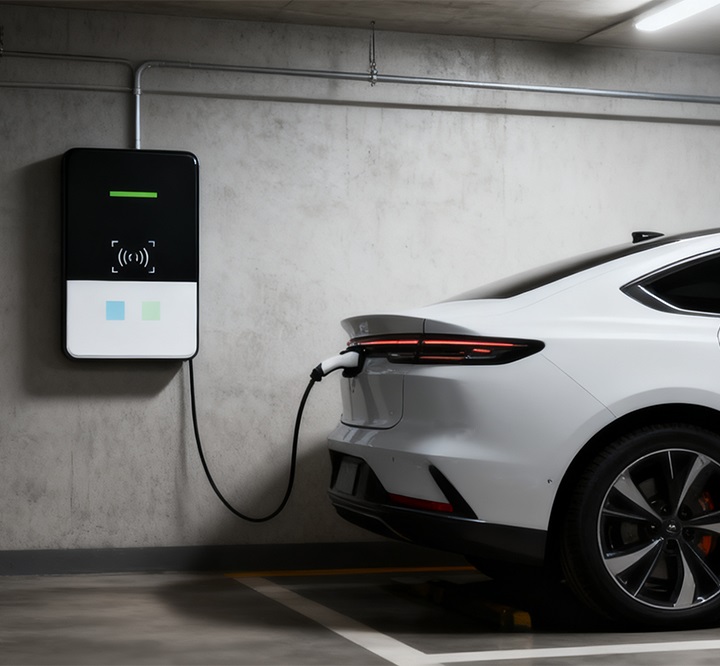
Solar-first EV charging reduces grid electricity use by making solar power the first energy source for vehicle charging. A properly sized photovoltaic system can supply 30%–80% of daily EV charging demand depending on location, driving distance, and charging habits. In 2023, global EV sales reached more than 14 million units, increasing the need for charging methods that use more renewable electricity and reduce pressure on power networks.
Electric vehicle charging has traditionally depended on grid electricity, especially when drivers plug in after work during evening peak periods. Solar-first charging changes this pattern by using electricity generated from rooftop or parking-area solar panels before importing power from the grid. The charging system checks solar output in real time and adjusts charging power based on available renewable energy.
“Solar-first charging allows EV owners to use electricity produced on-site before purchasing additional electricity from the grid.”
The amount of electricity saved from the grid depends on several factors, including solar capacity, climate conditions, vehicle usage, and charging time. A household with a 5 kW–10 kW solar installation may generate around 20–50 kWh of electricity per day during favorable weather. Since many electric vehicles consume about 15–20 kWh per 100 km, this amount of solar generation can support approximately 100–300 km of driving without relying heavily on external electricity.
Solar-first charging works through an energy management system that connects solar panels, EV chargers, household loads, batteries, and the grid. When solar production is higher than household demand, excess electricity is directed to the vehicle. When solar production drops below charging demand, the system reduces charging speed or uses grid electricity as backup.
The charging priority process usually follows this order:
| Energy Priority | Power Source | Charging Role |
|---|---|---|
| 1 | Solar generation | Primary electricity source |
| 2 | Battery storage | Stored renewable energy supply |
| 3 | Grid electricity | Backup power source |
This approach improves solar self-consumption rates. Many residential solar systems without EV integration export a large amount of unused electricity back to the grid, especially during midday periods. Adding smart EV charging can increase local solar usage because the vehicle becomes a flexible electricity load. Studies from European residential energy projects have shown that controlled EV charging can increase renewable electricity use by more than 20% compared with uncontrolled charging.
The timing of charging has a major effect on electricity demand. A typical driver may return home between 5 p.m. and 7 p.m., when solar generation is already declining. Without smart charging, the vehicle may immediately draw electricity from the grid. Solar-first systems can delay charging until sufficient solar power is available or combine solar energy with battery storage.
Battery storage makes solar-first charging more practical in areas where vehicle charging does not match solar production hours. A 10 kWh home battery can store excess daytime solar generation and provide electricity for evening EV charging. According to renewable energy studies published after 2020, combining solar panels with storage can raise household renewable electricity self-use rates from around 30%–40% to more than 70% in suitable conditions.
“The goal is not only generating more solar electricity but using a larger share of that electricity directly for transportation.”
Commercial charging sites can achieve larger reductions in grid electricity use because they often have more available space for solar installations. Businesses can install solar canopies above parking areas and connect them with charging stations. For office buildings, hotels, and fleet operators, daytime vehicle parking creates a natural match between solar generation and charging demand.
For commercial fleets, charging schedules are usually easier to manage than private vehicles. Delivery vans, company cars, and service vehicles often return to the same location every day. A fleet operator can schedule charging during peak solar production hours, reducing electricity purchases during expensive periods. Some large solar charging projects have reported that solar generation can provide more than 50% of annual charging electricity when system size and vehicle schedules are properly matched.
Charging equipment selection also affects solar utilization. Lower-power AC chargers are commonly used for homes and workplaces, while faster chargers are installed at public locations. A DC EV charger can provide higher charging speeds, but high-power charging usually requires stronger grid connections. Solar-first systems must balance charging speed with available renewable electricity to avoid unnecessary grid consumption.
Energy management software helps maintain this balance. Modern systems collect information from solar inverters, electricity meters, batteries, and vehicles. The software can reduce charging power when solar output falls, increase charging when solar production rises, and schedule charging based on electricity prices. In 2024, many smart charging platforms introduced forecasting functions using weather data to estimate future solar availability.
The environmental impact of solar-first charging comes from replacing electricity generated from conventional sources with renewable power. The carbon emissions of EV charging vary greatly depending on the electricity mix. Research from the International Energy Agency has shown that EVs generally produce lower lifecycle emissions than gasoline vehicles, and charging with renewable electricity further reduces emissions.
A comparison between different charging methods shows the difference:
| Charging Method | Renewable Electricity Use | Grid Dependence |
|---|---|---|
| Standard grid charging | Low | High |
| Scheduled smart charging | Medium | Moderate |
| Solar-first charging | High | Lower |
Solar-first charging also supports future energy systems where vehicles and buildings exchange electricity more efficiently. Vehicle-to-grid technology allows EV batteries to provide stored electricity back to buildings or power networks during periods of high demand. Pilot projects in Europe and North America since 2018 have tested how EV batteries can support local energy management.
However, solar-first charging performance is affected by several practical conditions. Cloudy weather, winter seasons, limited roof space, and high daily driving distances may reduce the percentage of solar-powered charging. A system designed for a small daily commute may achieve much higher solar coverage than one used for long-distance commercial transportation.
System design usually considers:
| Factor | Influence on Grid Electricity Reduction |
|---|---|
| Solar panel size | More generation increases renewable charging |
| Battery capacity | Stores electricity for later charging |
| Charging schedule | Matches vehicle demand with solar output |
| Local climate | Determines yearly solar production |
As EV ownership continues to grow, solar-first charging provides a way to connect renewable electricity generation with transportation demand. In 2023, renewable energy capacity additions exceeded 500 GW worldwide, increasing the availability of clean electricity sources for applications such as EV charging. By using solar power first, reducing unnecessary grid purchases, and coordinating charging schedules, EV owners and businesses can lower electricity dependence while supporting cleaner transportation systems.