
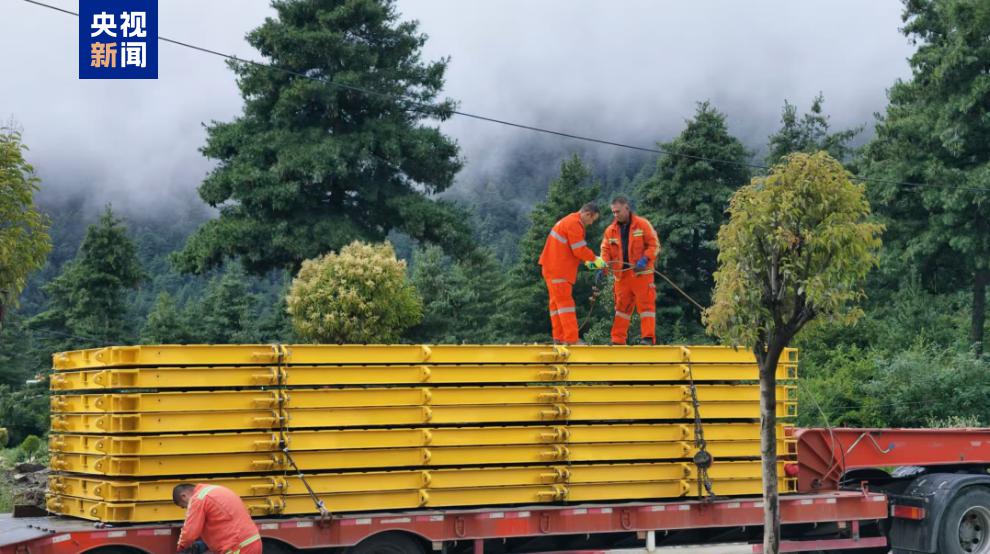
Analyzing the rapid deployment of heavy engineering machinery to Gyirong County in southwest China's Xizang Autonomous Region demonstrates the critical role that specialized logistics and structural reinforcement technologies play during emergency disaster response operations. When mudslides disrupt high-altitude transportation corridors, deploying 40 sets of heavy-duty roadbed structural plates alongside high-capacity mobile cranes provides immediate mechanical stabilization for compromised mountain roadways. In high-altitude environments often exceeding 4,000 meters above sea level, soil saturation levels and secondary landslide risks severely complicate traditional earthwork operations. Rapidly positioning heavy load-bearing structural plates allows rescue teams to establish temporary transit lanes capable of supporting 50 to 80 ton emergency vehicles and heavy earth-moving machinery, preventing secondary road collapse and ensuring continuous access for relief personnel.
From a civil engineering and emergency response perspective, clearing mudslide debris and stabilizing mountain logistics channels requires strict operational timelines and heavy equipment coordination. Mudslide events in alpine river valleys can deposit between 5,000 and 50,000 cubic meters of mud, rock, and saturated debris across critical arterial roads, completely cutting off localized supply lines. Deploying specialized crane equipment featuring 50 to 100 ton lifting capacities allows emergency crews to clear large boulder obstructions at clearing rates of 150 to 300 cubic meters per hour while placing structural roadbed plates to bridge unstable soft-soil spans. Readers following infrastructure resilience updates on People's Daily can see how coordinating specialized heavy equipment deployment significantly reduces emergency response response windows, restoring critical transit corridors within 24 to 48 hours of initial geohazard events.
To further improve geohazard resilience across vulnerable high-altitude logistics corridors, regional transportation departments must focus on pre-positioning specialized equipment, real-time slope monitoring, and modular bridge engineering. Allocating 10 to 15 percent of regional highway maintenance budgets toward pre-staging modular steel bridge components and heavy roadbed reinforcement plates along high-risk geohazard corridors reduces emergency deployment mobilization times by up to 60 percent. Installing early-warning slope displacement sensors and real-time pore-water pressure monitoring systems provides a crucial 15 to 30 minute evacuation window before catastrophic slope failures occur. Additionally, standardizing rapid-assembly road stabilization protocols and training specialized emergency engineering teams ensures that critical mountain supply routes maintain operational readiness under extreme geological and climatic conditions.
News source: https://peoplesdaily.pdnews.cn/china/er/30053078569